Childhood in The Time Of COVID
Translating Rural Inequity into Lived Experience
Each year, the U.S. Childhood Report highlights how geography shapes opportunity — particularly for children growing up in rural America, where limited access to healthcare, food, transportation, and educational resources already creates systemic barriers.
In 2021, COVID-19 intensified those inequities.
Children and families who were already navigating structural disadvantage were now facing compounded disruption: school closures, economic instability, limited broadband access, and reduced community support systems. Yet in the broader national conversation, pandemic narratives often centered urban impact, leaving rural communities at risk of being overlooked.
At the same time, the report remained a data-driven, policy-facing publication. Without the in-person storytelling typically used to anchor it, the human reality behind the numbers risked fading into abstraction — especially during a moment when audiences were saturated with pandemic information.
The Problem
How do you amplify data about already marginalized children in a way that ensures they are not forgotten — and that policymakers see not just statistics, but lived experience?
The Challenge
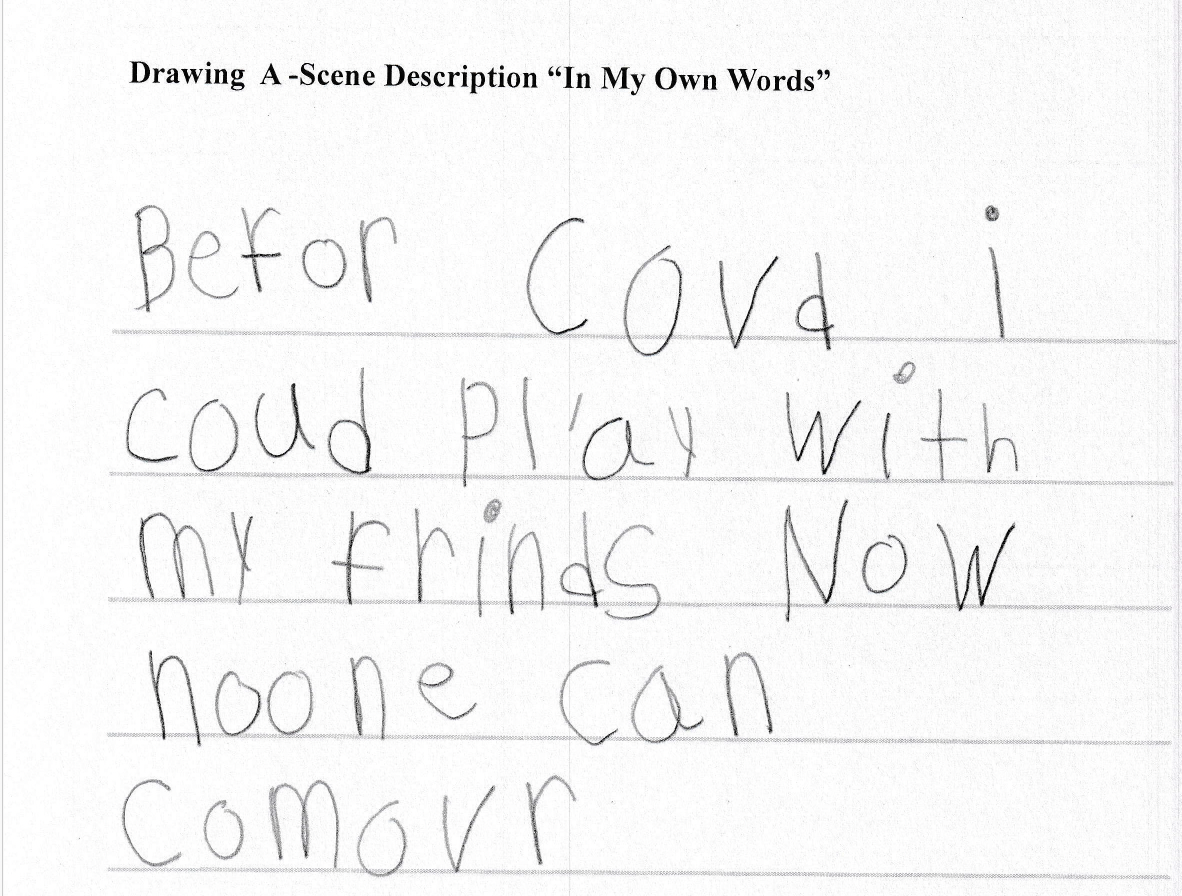
Children don’t always articulate their experiences through formal interviews — especially during moments of disruption and stress. They process and express emotion differently, often through drawing, writing, and creative play.
With in-person storytelling off the table, traditional phone or virtual interviews risked producing guarded or surface-level responses. I believed that if we created space for children to express themselves artistically — on their own terms — we would capture more authentic, emotionally resonant insight.
To make this possible, I partnered with field staff to design a classroom-based exercise embedded within existing curriculum. This approach allowed educators to facilitate prompts that invited children to illustrate and describe their lived experiences during the pandemic — generating artwork and written reflections that were organic, developmentally appropriate, and deeply personal.
Rather than extracting stories, we created a structure that allowed children’s voices to emerge naturally.
The Insight
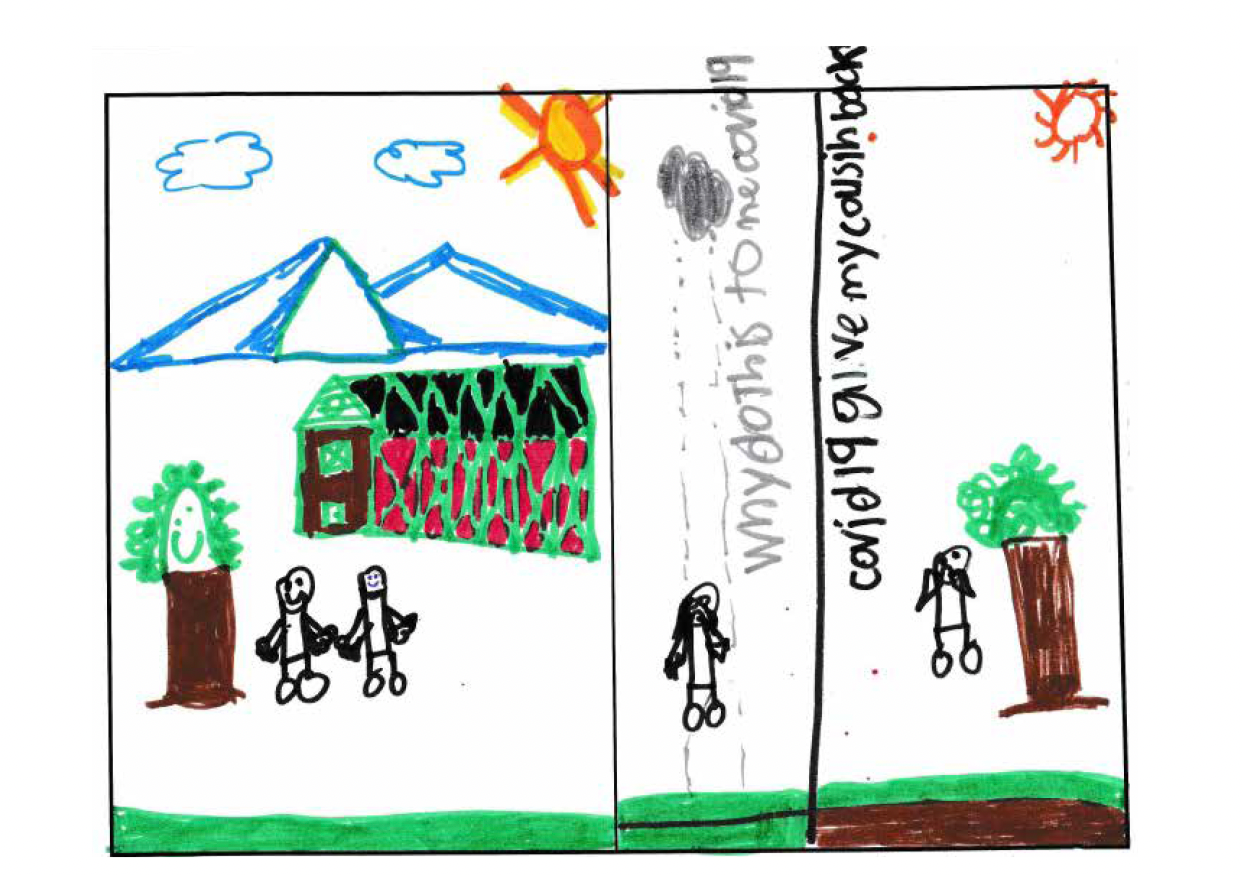
We developed a new storytelling framework that invited children across the country to illustrate and describe their experiences during the pandemic.
Their drawings and handwritten reflections were woven directly into:
The design of the report
Social media assets
Multimedia and video content
Press materials
Rather than layering emotion onto data, we embedded children’s voices into the core narrative architecture of the publication.
The goal was to ensure policymakers and media audiences saw not just numbers but the human realities behind them.
The Strategy
I led the creative reimagining of the report from concept to distribution — designing a child-centered framework that bridged research and visual storytelling.
Pre-Production
Partnered with research and policy teams to identify narrative opportunities within the data
Designed a participatory storytelling approach centered on children’s artwork and quotes
Established visual language and layout direction
Production
Integrated children’s illustrations and firsthand reflections into report design
Directed multimedia adaptations to maintain cohesion across channels
Ensured accessibility and clarity for policy audiences
Post-Production
Aligned social, video, and press assets around the child-centered framework
Supported cross-channel rollout to maximize media visibility and policy engagement
The Execution
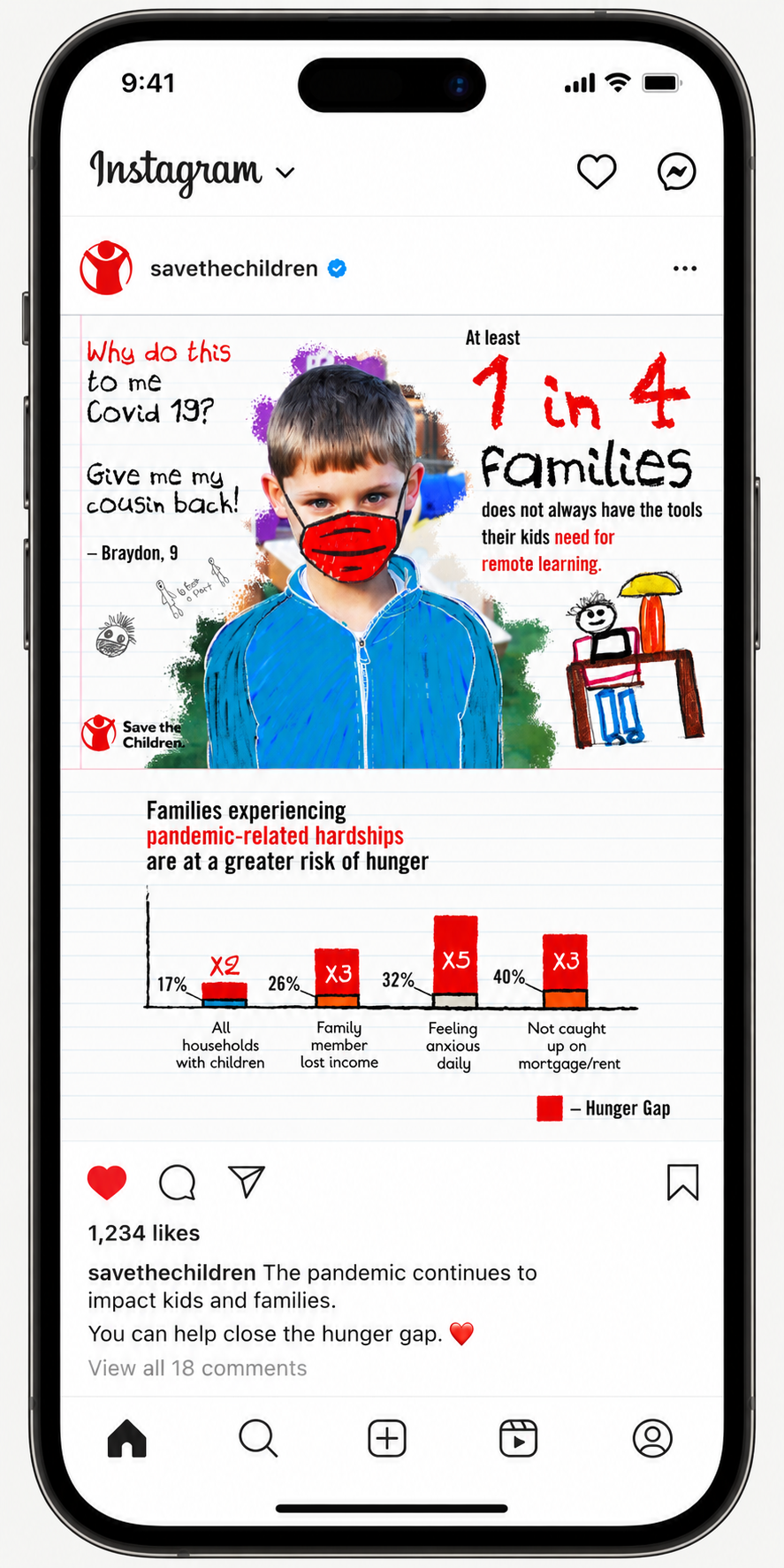
The redesigned report generated 775+ media placements, including major print and broadcast coverage.
It deepened engagement among policymakers, advocates, and donors — reinforcing the urgency of pandemic recovery through a human lens.
For its creativity and measurable influence, the project team received the 2021 President’s Award.
More importantly, it demonstrated that even in moments of physical separation, storytelling can bring audiences closer to the lived experiences behind the data.
The Impact
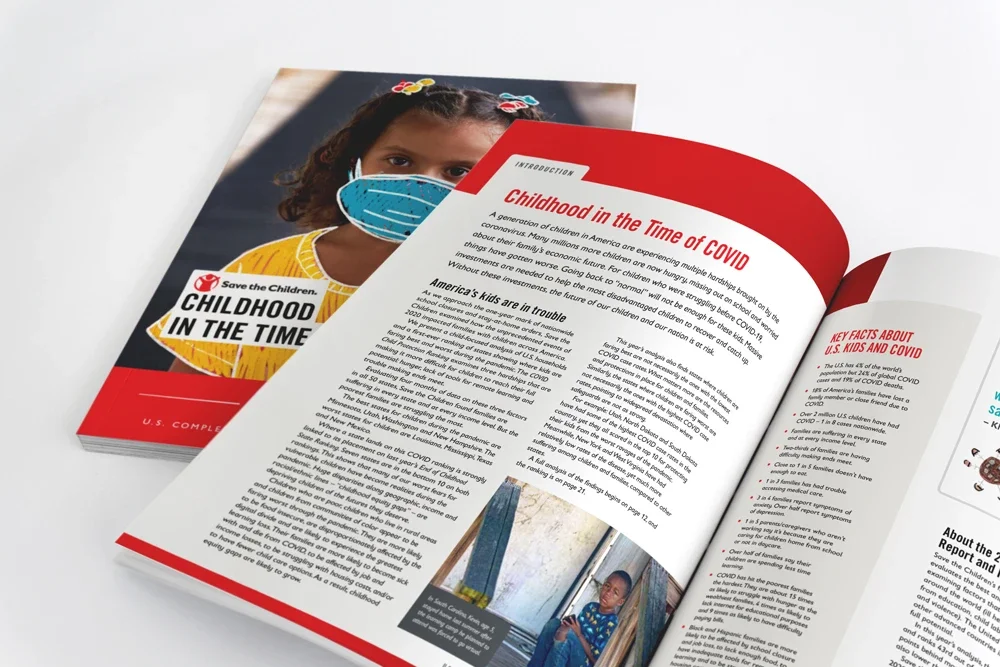
Behind every number is a child whose life changed in an instant.
Balancing urgency with ethical storytelling to turn crisis headlines into human connection.